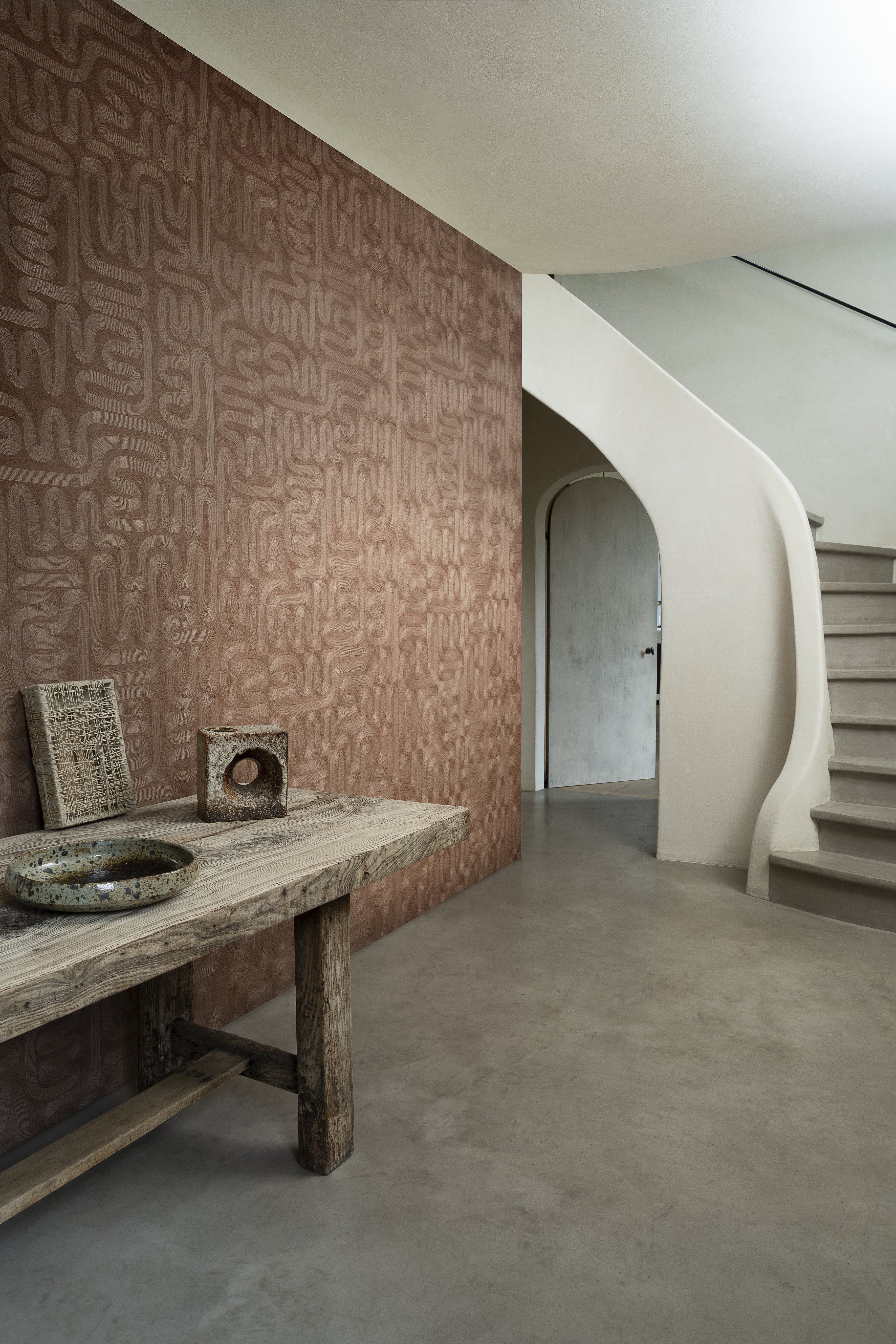
Hanging wallpaper over fiberglass wallpaper is sometimes possible, but in practice it often gives a less sleek result than you hope for. The texture of fiberglass wallpaper, glass fleece or glass fabric wallpaper often stays visible, and the adhesion of the new wallpaper is not always a given either. If you want to know whether wallpapering over fiberglass is a good idea in your situation, it mainly comes down to three things: the texture of the wall surface, the condition of the existing wallpaper and the type of new wallpaper you want to hang. Not sure what is on your wall? Read the difference between fiberglass wallpaper and glass fabric wallpaper.
When can you hang wallpaper over fiberglass wallpaper?
Hanging wallpaper over fiberglass wallpaper is only an option if the existing layer is fully attached, dry, clean and has little texture. With smooth fiberglass wallpaper or fine glass fleece, the chance of an acceptable result is greater than with coarse glass fabric with a clear pattern such as herringbone, small squares or spachtelputz. The more relief there is in the wall, the greater the chance that you will keep seeing it through the new wallpaper.
If you want to paste wallpaper over fiberglass wallpaper, look not only at adhesion, but also at the finish. A wall can be technically paperable while the end result still looks restless. You see this mostly with plain, light-colored or thin wallpaper. With photo wallpaper over fiberglass wallpaper, texture usually shows up even faster, because you expect a sleek image there.
Wondering whether you can hang wallpaper over fiberglass wallpaper? The practical rule of thumb is simple: the smoother the wall surface, the greater the chance of a nice result.
Why is wallpapering over glass fabric or glass fleece often discouraged?
The biggest reason is the texture. Glass fabric wallpaper is made to be strong, crack-bridging and paintable, but not to serve as a perfect base for new decorative wallpaper. That woven texture often stays visible under a new layer. Especially if you hang thin non-woven wallpaper or paper wallpaper over glass fabric, the pattern of the wall surface can show through.
The finish of the existing layer matters too. Many walls with fiberglass wallpaper have already been painted once or several times. So anyone hanging wallpaper over painted fiberglass wallpaper deals not only with texture, but also with a wall surface that may absorb less. That makes gluing harder and increases the chance of poor adhesion.
Seams, damage, air bubbles or loose spots in the old fiberglass wallpaper also work through into the new finish. That is why hanging over glass fleece or over scan wallpaper is only recommended if the wall is really smooth and stable.
Which types of wallpaper are most likely to cause problems?
Non-woven wallpaper over fiberglass wallpaper
Pasting non-woven wallpaper over fiberglass wallpaper sounds logical, but it is not always the best combination. Non-woven wallpaper follows the wall surface fairly directly. If there is still relief in the fiberglass wallpaper, you will often see it. Especially with plain or light wallpaper, that gives a less sleek result. In addition, the glue has to bond well to the existing wall surface, and that can be harder if the fiberglass wallpaper is already painted or dirty.
Paper wallpaper over fiberglass wallpaper
Paper wallpaper is even more sensitive to unevenness. It soaks into the wall surface sooner and generally shows texture more strongly. That is why paper wallpaper over glass fabric wallpaper is usually not a wise choice if you want a neat, smooth wall.
Photo wallpaper over fiberglass wallpaper
Photo wallpaper over fiberglass wallpaper needs a base that is as smooth as possible. Any underlying texture can stay visible in large areas or fine details of the print. With photo wallpaper, an uneven wall surface stands out sooner than with busy patterned wallpaper.
Renovation non-woven over fiberglass wallpaper
Renovation non-woven over fiberglass wallpaper is often considered to smooth the wall, but here too the wall surface remains decisive. If the texture of the existing fiberglass wallpaper is too coarse, it can still work through. Renovation non-woven over fiberglass wallpaper is therefore not automatically the solution. For a truly sleek end result, leveling or removing first is often better. Not sure whether renovation non-woven suits your project? Then read: renovation non-woven wallpaper: what is it and when do you choose it?
When is wallpaper over fiberglass a reasonable choice?
Pasting wallpaper over fiberglass can be a reasonable choice if your situation meets these conditions:
- the existing fiberglass wallpaper is firmly attached everywhere;
- the wall is clean, dry and sound;
- the texture is fine or almost smooth;
- there are no lifting seams, cracks or damage;
- you choose new wallpaper that can hide a little, such as a somewhat sturdier or busier design;
- you accept that the result may be less sleek than on a leveled wall.
When hanging over smooth fiberglass wallpaper or fine glass fleece, the chance of success is clearly greater than with coarse glass fabric or tasso-like textures. Anyone who wants to hang wallpaper over glass fleece generally starts from a better position than someone working over glass fabric with a visible diamond or grain pattern.
How do you judge whether your wall is suitable?
Before you order new wallpaper, it is smart to check the existing wall critically. Pull lightly on a corner or seam of the old fiberglass wallpaper. If it comes loose anywhere, wallpapering over is not a good idea. Then run your hand over the wall. What you can clearly feel now, you will often still see after hanging.
Look at paint layers too. Hanging over painted fiberglass wallpaper is harder if the paint layer is closed or glossy. In that case you sometimes have to degrease and lightly sand first to improve adhesion. If there are several old paint layers or you see uneven repairs, the chance of a sleek result gets smaller.
If you want to be sure how it turns out, make a test patch first. That way you quickly see whether the pattern of the fiberglass wallpaper comes through the new wallpaper.
What are the best alternatives if hanging directly over it is not a good idea?
Removing fiberglass wallpaper
The best base for new wallpaper is usually a clean, smooth wall. That is why this is often the safest route if you want a sleek end result: removing wallpaper: step-by-step guide and tools. Especially with coarse glass fabric wallpaper, damaged strips or a wall with many old paint layers, this is usually the wisest choice.
Removing takes some work, but it prevents the old texture from staying visible or the new layer from coming loose later. After that you can level the wall, let it dry and treat it again.
Leveling or applying thin plaster
If the fiberglass wallpaper is firmly attached but the texture is bothersome, leveling can be a solution. It makes the wall smoother before you hang wallpaper again. This is especially interesting if removing would cause a lot of damage or if you need a smooth base for non-woven wallpaper or photo wallpaper, for example.
Choosing a smooth wall finish
Anyone who mainly wants to get rid of the visible texture can also switch to a smooth finish such as glass fleece or renovation non-woven, but only if the wall surface is really made suitable for it. Pasting glass fleece over glass fleece, or fiberglass over fiberglass without preparation, rarely gives the best result. The old layer then keeps too much influence on the new finish.
How do you take fiberglass wallpaper off the wall?
Removing fiberglass wallpaper is often harder than removing standard wallpaper, because it is strong and firmly glued. Still, it usually works with the right approach. Always start with a test corner, so you can see how firmly the strips are attached and whether the wall behind stays intact. Stubborn strips come loose more easily with wallpaper steamers.
- Score the wallpaper lightly in several places or use a perforator.
- Wet the wall with water and wallpaper remover if the top layer allows it.
- Let the product soak in long enough.
- Carefully loosen the fiberglass wallpaper with a putty knife.
- Remove glue residue and let the wall dry well.
- Level any damage before you hang wallpaper again.
With some painted or water-repellent types, moisture barely soaks in. In that case, mechanical removal or extra preparation is needed. After that you can judge whether primer is needed on the bare or leveled wall.
Is primer needed with fiberglass wallpaper or after removal?
Primer is not standard on existing fiberglass wallpaper, but it is relevant if you have first stripped or leveled the wall. An absorbent wall surface takes up glue unevenly, so the new wallpaper is less pleasant to hang. On a smoothed wall, primer often gives more even adhesion and a neater result.
If you do hang wallpaper over existing fiberglass wallpaper, it is less about primer and more about whether the wall surface is clean, stable and suitable enough. With heavily painted or closed surfaces, a different pre-treatment may be needed, such as degreasing or light sanding.
Can you paste fiberglass wallpaper over another wall surface?
People who search for fiberglass wallpaper over wallpaper, fiberglass wallpaper over old wallpaper or fiberglass wallpaper over non-woven wallpaper often really have the same question: how important is the wall surface? The answer is simple: very important. Fiberglass wallpaper is strong and hides small irregularities, but it does not fix coarse texture, loose layers or poorly bonding wall surfaces.
Fiberglass wallpaper over plaster or fiberglass wallpaper over plasterboard works fine, as long as the wall is dry, clean and sound. Fiberglass wallpaper over textured paint, fiberglass wallpaper over granol or fiberglass wallpaper over existing wallpaper is harder and depends entirely on smoothness and adhesion. Pasting fiberglass wallpaper over fiberglass wallpaper is also usually not the first choice, because old texture and seams can work through. If you do want to work over an existing layer, take a look at: hanging wallpaper over wallpaper: is it possible?
Frequently asked questions
Hanging wallpaper over fiberglass wallpaper: is it possible?
Yes, sometimes, but only if the existing fiberglass wallpaper is smooth, clean, dry and fully attached. In many cases, though, the texture stays visible, so removing or leveling gives a better result.
Can you just paste wallpaper over non-woven wallpaper?
You can if the non-woven wallpaper is firmly attached and the wall surface is smooth. The same principle applies to wallpaper over glass fleece or fiberglass wallpaper: the condition of the existing layer decides whether wallpapering over is wise.
How can I hang wallpaper on glass fleece?
Hanging wallpaper on glass fleece is possible if the glass fleece is smooth and stable. Clean the wall, check for loose seams and make a test patch first. The smoother the glass fleece, the greater the chance of a sleek result.
Is scan wallpaper the same as glass fleece or fiberglass wallpaper?
Scan wallpaper is often used as a catch-all name for smooth, renovation-type wall finishes. In practice, the question of hanging over scan wallpaper is very similar to hanging over glass fleece: it is mainly about smoothness, adhesion and visible texture.
Can you paint over fiberglass wallpaper instead of hanging wallpaper?
Yes, painting over fiberglass wallpaper is often simpler than pasting new wallpaper over it. Especially if the existing glass fabric is still firmly attached and you mainly want a different color, painting the wallpaper is usually the logical choice.
Which glue do you use if you still want to hang wallpaper over fiberglass wallpaper?
The right glue depends on the new wallpaper, but the wall surface must always be clean and sound. If you are working with glass fabric, glass fleece or renovation non-woven, first read which wallpaper glue for which type of wallpaper and choose a glue that suits that type of wall covering and has enough initial grab.